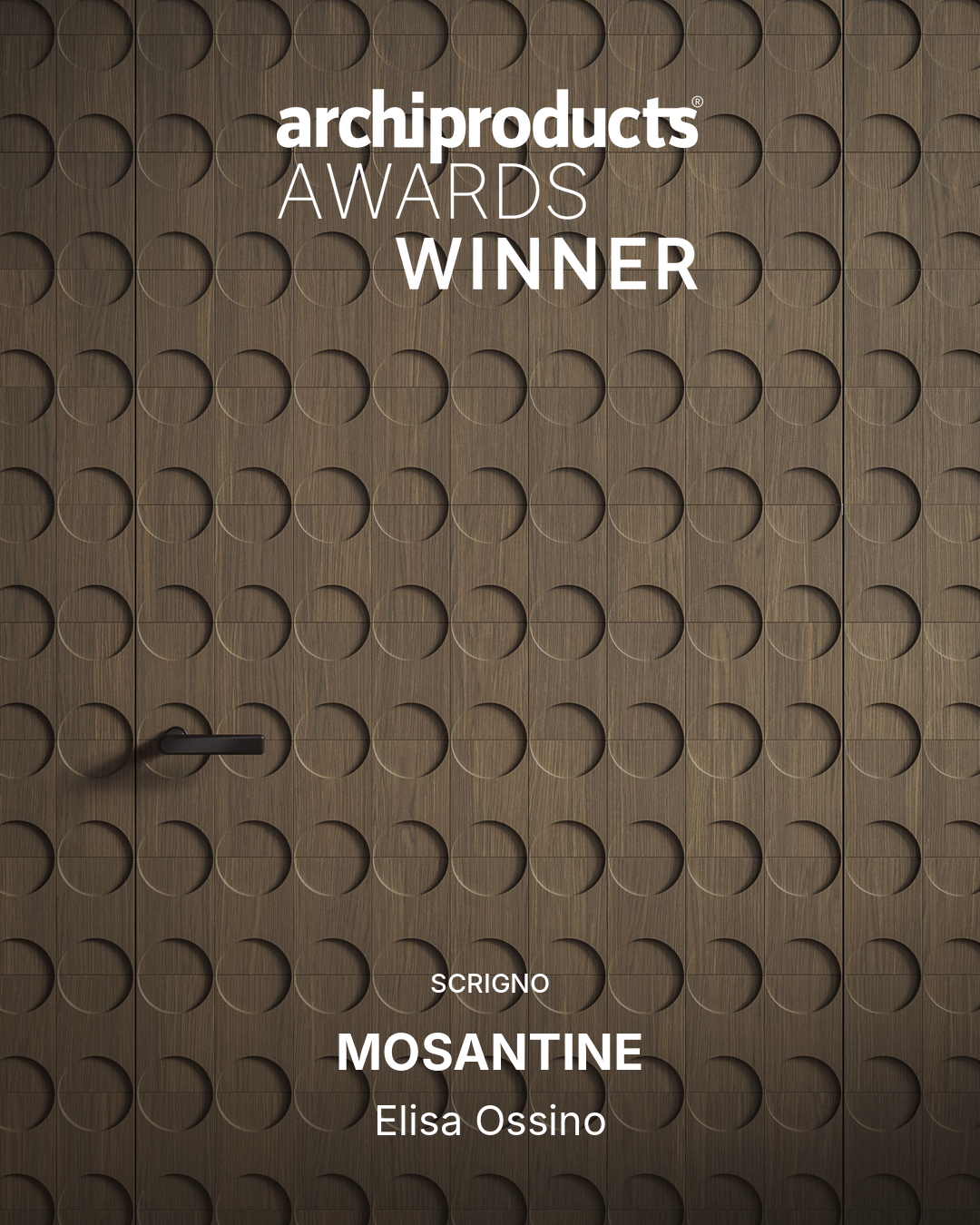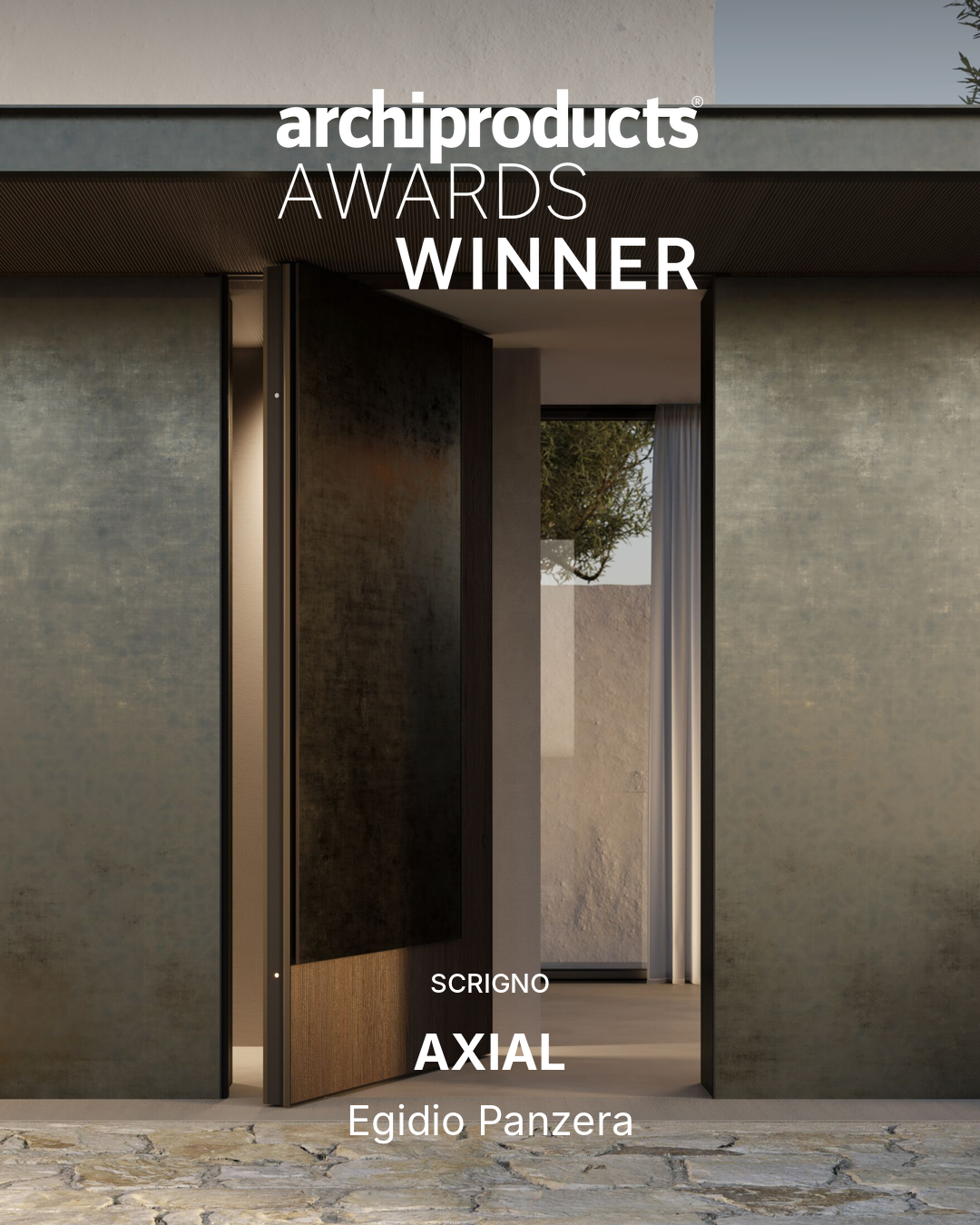


A double award for Scrigno at the ADA Night 2026
Axial, the pivot security door designed by Egidio Panzera and the three-dimensional wooden surfaces Mosantine by Elisa Ossino, recognized for their contemporary vision of design.
Milan, 19 November 2026 – Scrigno has won two Archiproducts Design Awards 2026 with Axial and Mosantine, two projects that express the brand’s evolution toward an increasingly rich architectural language, in which technical innovation, aesthetic research and design culture come together to redefine the role of the door in the contemporary interior.
The awards were announced yesterday at the ADA Night 2026, held at Superstudio Più in Milan, the event dedicated to excellence in international design.
The two awards recognize different but complementary design approaches. On one side is Axial, the pivot security door from the Archè collection, designed by architect Egidio Panzera, which turns the entrance into an architectural gesture. On the other is Mosantine, the system of modular three-dimensional wooden elements by Elisa Ossino, which overcomes the distinction between door and wall to create continuous surfaces that interact with light and space.
Mosantine: the wall becomes a living surface
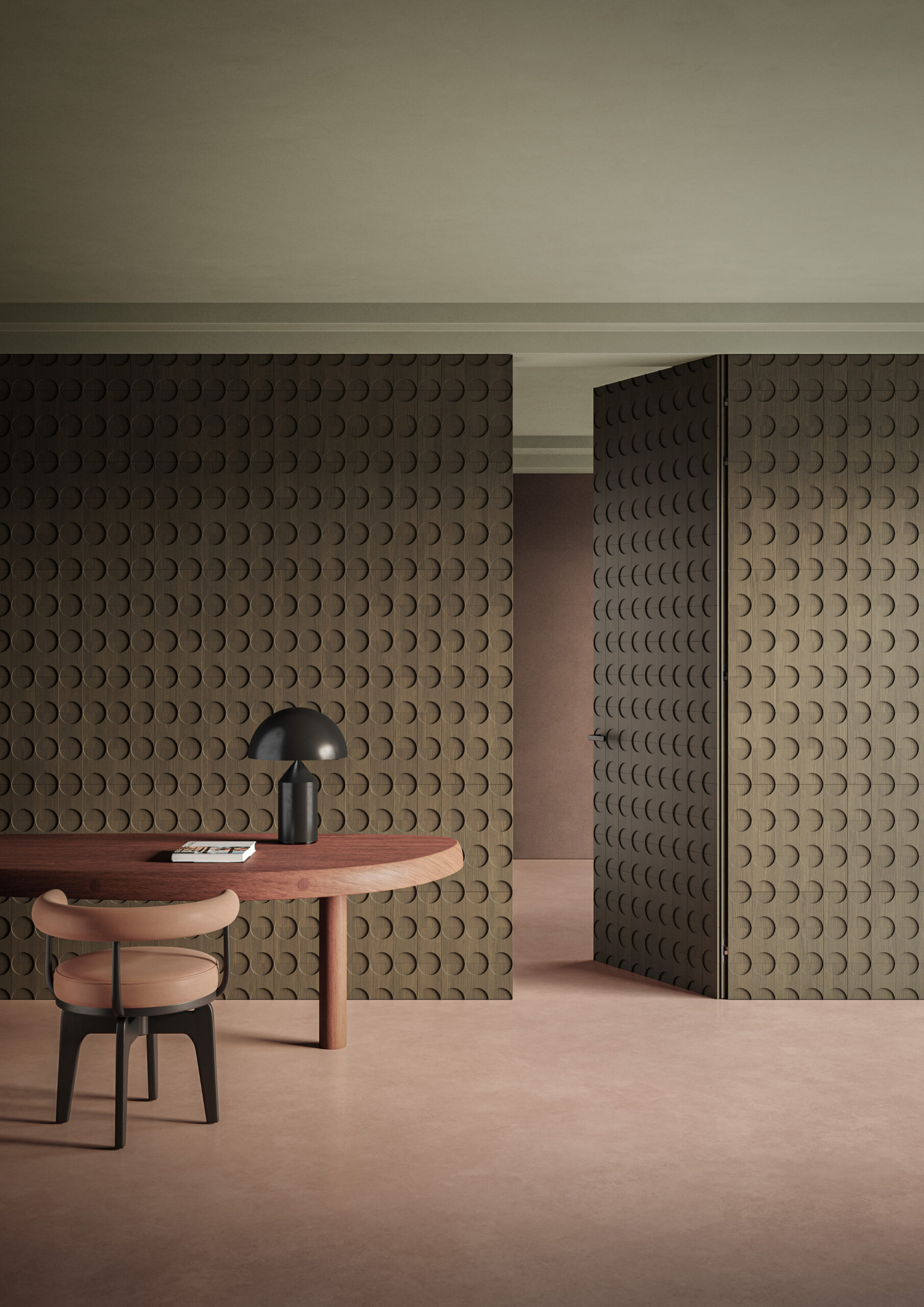
With Mosantine, designed by Elisa Ossino, Scrigno explores a new expressive dimension of wood, transforming the surface of the door into a three-dimensional architectural element.
Developed in continuity with the research behind the Mappa Mundi collection, Mosantine stems from a contemporary reinterpretation of the Adriatic mosaic tradition and of Roman and Byzantine mosaic culture. Small modular tesserae in wood species build, through geometric repetition, a continuous surface that can extend from the door to walls, wood panelings and furnishings.
Available in the Tonda (round) and Quadra (square) geometries, in light and dark oak, Mosantine finds its first expression in the Arena and Insula doors of the Ariminum line, where the three-dimensionality of the design meets the natural uniqueness of wood.
A living material, never identical to itself, wood engages constantly with light: grain, relief and nuances create a changing play of shadow and depth, transforming the perception of the surface over the course of the day.
Elisa Ossino’s project thus renews the very meaning of the door, which transcends its own autonomy to merge with the architecture in a single composition, where nature, geometry and light become part of a shared language.
Axial: when movement becomes architecture
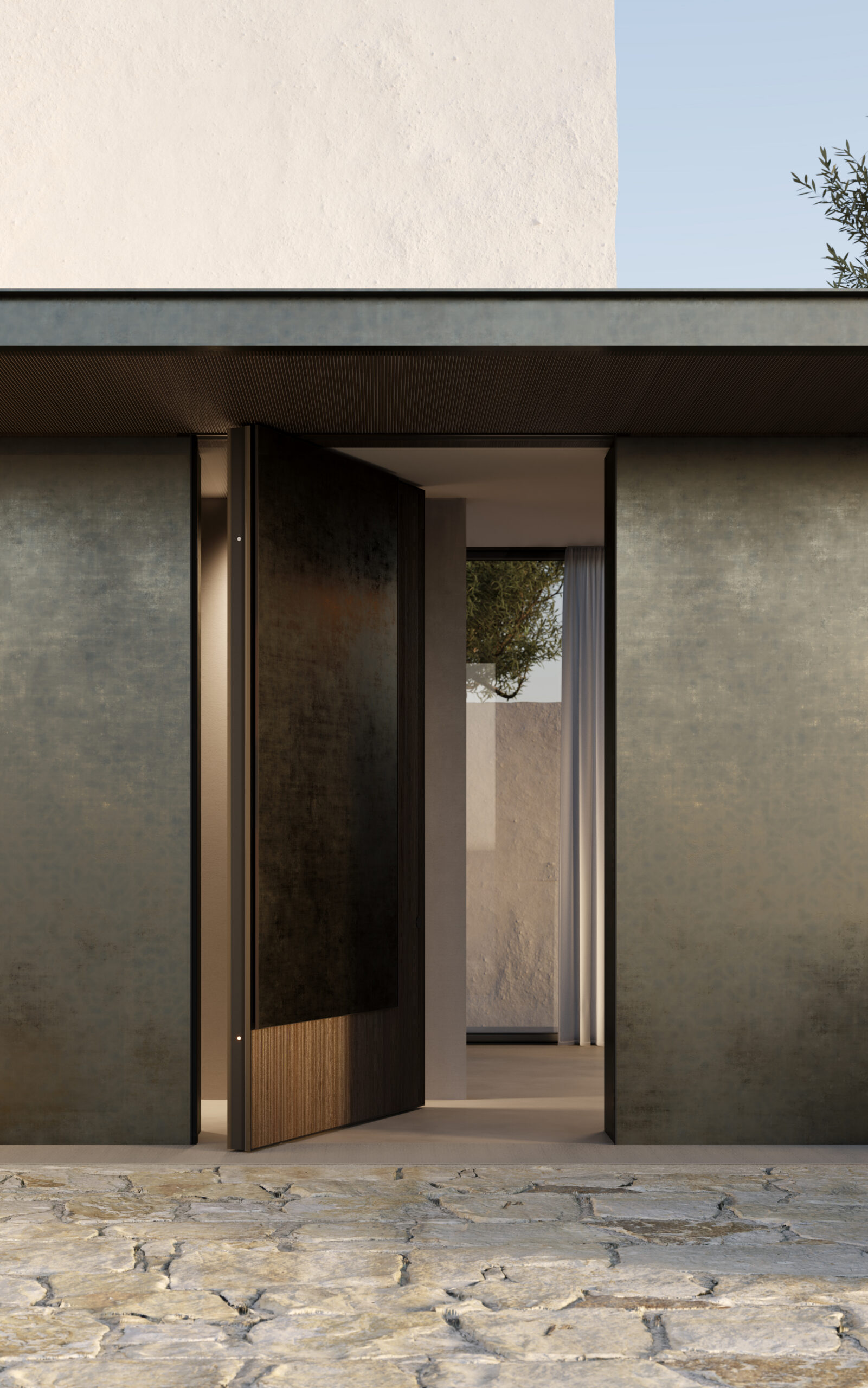
With Axial, Scrigno reinterprets the concept of the security door through a solution in which safety, innovation and formal research coexist in an essential balance.
Part of the Archè collection designed by Egidio Panzera, Axial stands out for its pivot opening system with off-center pivot, which turns the movement of the door leaf into a fluid, theatrical gesture. The door thus becomes an architectural element capable of defining the identity of the entrance, combining a sculptural presence with measured elegance.
Behind the purity of the design lies sophisticated engineering research, expressed in the patented Velvet hinge, designed to ensure smooth, silent and controlled movement even on large door leaves.
The ability to customize the door through the Materia, Tracce and Heritage aesthetic lines further extends design flexibility, turning materials, textures and details into tools of architectural expression.
The recognition from the Archiproducts Design Awards honors this synthesis of technological performance and design sensitivity, in which the security door goes beyond its traditional function to become the protagonist of the space.
Two awards, one design vision
The double award at the Archiproducts Design Awards 2026 recognizes Scrigno’s evolutionary path: from its historic specialization in pocket sliding doors, the company has progressively expanded its design universe, exploring new possibilities for the relationship between openings, surfaces and spaces.
With Axial and Mosantine, this evolution takes shape through two distinct approaches: movement as architectural gesture, and surface as an element of spatial continuity.